
Preparing for Facial Plastic Surgery
Proper preparation is the foundation of a smooth and successful facial surgery recovery. From quitting smoking to arranging your support system, this step-by-step pre-operative checklist helps you get ready physically, mentally, and logistically for a safe procedure and faster healing. If you’re scheduled for a facelift, neck lift, or rhinoplasty, these evidence-based guidelines will help you begin your cosmetic journey with clarity and confidence.
Your Essential Checklist
6 Weeks Before Surgery
- Stop all nicotine use: This includes cigarettes, vaping, and nicotine gum. Quitting now improves blood flow, enhances healing, and significantly reduces the risk of complications from anesthesia and wound recovery.
- Plan your time off: Schedule at least one full week away from work or school. For more extensive procedures, such as facelifts or neck lifts, aim for two weeks of downtime.
3 to 1 Week Before Surgery
3 Weeks Before:
- Complete all requested blood work and ECG tests. Be sure to submit your results to the clinic no later than one week before your scheduled procedure.
2 Weeks Before (for surgeries under general anesthesia or sedation):
- With your doctor’s approval, discontinue semaglutide medications like Ozempic, Wegovy, or Rybelsis. These drugs can slow digestion and increase the risk of complications during anesthesia.
1 Week Before:
- Stop taking blood thinners (e.g., Plavix, Coumadin, Xarelto, Heparin), but only with clearance from your prescribing physician.
- Avoid alcohol for at least 48 hours before your surgery.
- Eliminate aspirin, NSAIDs (like Advil or Naprosyn), and any supplements that increase bleeding risk (garlic, ginger, vitamin E, fish oil, green tea, etc.).
- Begin taking Arnica Montana 12 CH (5 granules, 3 times per day) to help reduce swelling and bruising. Continue this until one week after surgery.
- Consider purchasing full-coverage makeup if you’d like to conceal any post-operative bruising during recovery.
The Day of Surgery
Your surgery day has arrived, and being fully prepared will help reduce stress and ensure a smoother experience. Follow these final instructions carefully to set yourself up for a safe, successful procedure and a comfortable start to recovery.
What to Do Before You Leave Home
- Fasting is critical: Do not eat or drink anything for at least 6 hours before your surgery. You may sip clear fluids (like water or apple juice) up to 2 hours prior, but nothing beyond that.
- Take a thorough shower: Wash your face and body with antiseptic soap the night before and/or the morning of surgery. Avoid applying any creams, lotions, makeup, or deodorant.
- Take essential medications only:
- If you’re prescribed heart or blood pressure medications, take them with a small sip of water unless otherwise instructed.
- Skip diuretics and any non-essential medications unless approved.
- If you use an inhaler, bring it with you.
- For diabetic patients: Follow your personalized instructions given by your physician or anesthesiologist regarding insulin or oral medications.
What to Avoid
- No contact lenses: Wear glasses instead, and bring your glasses case for safekeeping.
- Leave valuables at home: This includes jewelry, piercings, watches, and cash.
- Avoid hair products or accessories: No clips, elastics, or decorative items. Hair should be clean and loose.
What to Wear
- Choose comfortable, loose-fitting clothes that open from the front (e.g., a button-up shirt). Avoid anything that needs to be pulled over your head, as this can disrupt your incisions post-op.
Who to Bring
- Arrange for a responsible adult to accompany you. This person must drive you home and stay with you overnight, especially in the first 24 hours after surgery.
Arrival Time
- Arrive at the clinic 15 minutes before your scheduled procedure time to allow for check-in, pre-op prep, and final questions.
For any questions or concerns related to facial surgery preparation, contact our clinic.
How You Might Feel
Your Emotional Timeline During Recovery
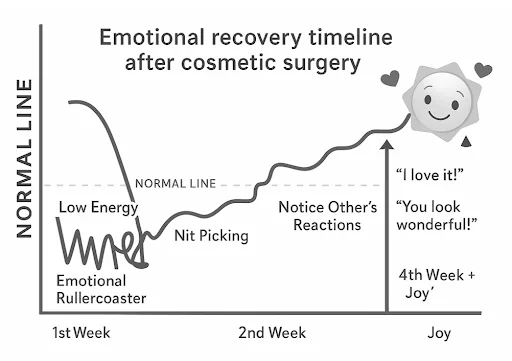
This graph reflects the natural emotional ups and downs many patients feel throughout the cosmetic surgery journey. You may feel excited at first, then hit a low during recovery, followed by steady improvements as your results become visible.

Healing Begins
Post-Operative Week 1
The first week of facial surgery recovery is focused on rest, protection, and gentle care. It’s completely normal to experience swelling, bruising, and emotional fluctuations during this stage. By following your surgeon’s post-operative instructions carefully, you can reduce the risk of complications and support a smoother, more comfortable healing process.
Rest and Supervision During Facial Surgery Recovery
- Have a responsible adult stay with you for the first 24 to 48 hours after surgery to help monitor your recovery and provide support.
- Prioritize rest. Only engage in light movement such as slow walking or repositioning — no bending or lifting.
- Keep your head elevated on two or more pillows when sleeping. This helps reduce swelling and improves circulation. Continue this position for at least three weeks.
Driving and Post-Surgery Alertness
- Do not drive if you are taking narcotic pain medications or have blurred vision, as both affect your reaction time and safety.
- Most patients should wait at least two weeks before driving. You must have full neck mobility, clear vision, and be completely off sedating medications.
Smoking and Alcohol
- No smoking at all — even a single puff can significantly delay healing, increase the risk of infection, and lead to poor scar formation.
- Avoid alcohol for at least one full week after surgery. Alcohol can interact with medications and exacerbate swelling or bruising during this sensitive phase of healing.
Swelling and Bruising
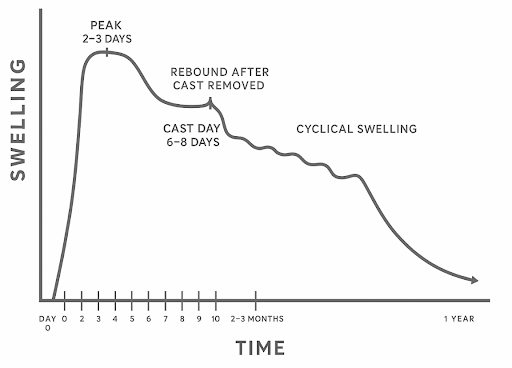
- Swelling is expected to peak around days 3–4. This is normal and varies by procedure.
- Apply cold compresses or ice packs (20 minutes on, 20 minutes off) to the face for the first few days. Always wrap ice in a cloth or gauze — never apply it directly to your skin.
- Bruising is common and may last 2–3 weeks. Subconjunctival hemorrhage (redness in the whites of your eyes) may also occur — it looks alarming but is generally harmless if you have no pain or vision changes.
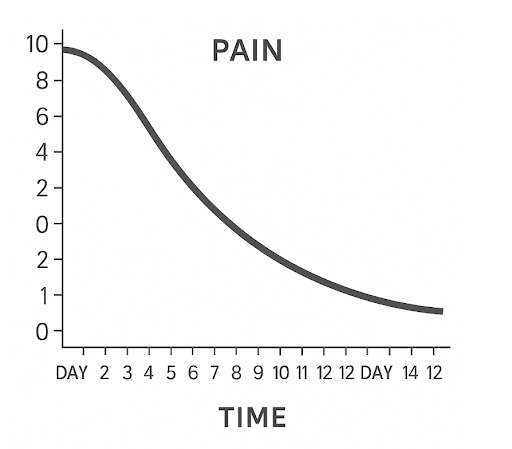
Pain and Discomfort
- Pain typically peaks at 24 hours post-surgery, averaging around 4–5 out of 10 in intensity.
- Most patients only require about 5 opioid tablets total. Take pain medication before pain becomes severe and always as directed.
- Do not take anti-inflammatories (NSAIDs) unless your doctor approves.
Wound Care and Dressings
- Clean your incisions 4 times daily using a Q-tip soaked in a 50% water / 50% peroxide solution.
- Apply the prescribed ointment 4×/day to your stitches (and inside the nostrils if you had a rhinoplasty).
- Large dressings can usually be removed after 24 hours. Your nurse will handle this during your first visit, or you may do it yourself if no appointment is scheduled.
Diet and Hydration
- Drink plenty of fluids and eat a soft diet for the first two days.
- Consider using stool softeners to prevent constipation caused by pain medications or inactivity.
Activity Guidelines
- Gentle walking is encouraged as soon as you’re able.
- Avoid lifting anything heavier than 5 lbs.
- Do not bend over for the first 3 days.
- Refrain from sweating or strenuous activity.
Makeup and Hair
- Do not apply makeup directly over incisions for at least one week unless your surgeon gives explicit permission.
- Avoid all hair products and heat styling tools until approved.
Travel
- Air travel is not recommended until after your first post-operative checkup (usually within 5–7 days).
Your Cosmetic Results
- This week is about healing, not appearance. Swelling and bruising may obscure your results.
- For some procedures (like eyelid or facelift surgery), it can take 2–3 weeks before you feel socially presentable.
Mental Health and Emotions
- Emotional ups and downs are very common. You may feel tired, irritable, or anxious.
- Many patients describe this period as an emotional roller coaster — don’t worry, it’s part of the process.
Transitioning Back to Routine
Post-Operative Week 2
As you enter the second week of your facial surgery recovery, you’ll likely begin to notice steady improvements. Swelling and bruising should start to subside, pain levels decrease, and your energy may gradually return. While you’re not fully healed yet, this phase marks an important milestone in the post-operative healing timeline, where light activity can safely resume with caution. Staying consistent with your aftercare plan is key to maintaining progress and preventing setbacks.
Activity and Movement in Week 2
- Light cardio such as walking or using a stationary bike is generally safe at this point, unless your surgeon advises otherwise.
- Continue sleeping with your head elevated on pillows to support blood circulation and help reduce residual post-op swelling.
- Avoid heavy lifting, bending over, or high-impact exercises that could increase facial pressure or delay healing.
Driving and Daily Activities
- You may resume driving if you’re not taking narcotic pain medications, your vision is clear, and you can move your neck without discomfort.
- For most patients, it’s recommended to wait at least two full weeks before returning to regular driving or commuting routines.
Smoking and Alcohol Guidelines
- Do not resume smoking, even secondhand smoke exposure can impair tissue oxygenation, slow scar healing, and increase your risk of complications.
- Avoid alcohol for at least 3 weeks post-surgery, unless cleared for a special occasion. Alcohol can interfere with medications and may worsen swelling or bruising during recovery.
Swelling and Bruising
- Swelling should now be gradually decreasing from its peak in Week 1.
- Continue using ice packs and head elevation as needed for comfort.
- Bruising may still be present but should be visibly improving each day.
Pain and Medications
- Most patients report a significant decrease in pain compared to Week 1.
- Pain medications may be reduced or discontinued depending on your comfort level.
- Continue any prescribed medications exactly as directed.
Wound Care and Scar Management
- Continue cleaning incisions 4× daily until all scabbing and crusting has resolved.
- Begin applying a silicone-based scar treatment (such as ) if approved by your surgeon.
- Protect all healing scars from the sun with SPF 30+ or by covering the area for the next 6 months.
Makeup and Hair Care
- You may now use makeup to cover bruising, but only if it was approved at your first post-op appointment.
- Gentle hair care may resume, but avoid pulling, harsh products, or heat styling tools directly near incision sites.
Travel
- Air travel is generally permitted after your first post-op checkup, but always confirm with your surgeon before flying.
Cosmetic Results
- While you’re still healing, early signs of your results may start to appear.
- Swelling is still significant for many patients, so continue to manage expectations. The final result will take time.
Emotions and Mental Health
- Emotional ups and downs can continue into Week 2. Many patients feel frustrated that they don’t yet see their final result — this is normal.
- Be patient with yourself and lean on your support system. These feelings usually improve by Week 3.
Doctor Visits
- You should have had your first post-op appointment during Week 1.
- Follow-up visits will be scheduled as needed by your surgeon based on your healing progress.
The place for my face
Gaining Momentum
Post-Operative Week 3
By Week 3, most patients begin to feel noticeably better, both physically and emotionally. Swelling and bruising are usually on the decline, and daily tasks may start to feel more manageable. However, this is still a delicate healing phase. Be mindful of your body, take it slow, and avoid the temptation to “do too much too soon.”
Activity and Exercise
- You can continue with light cardio (walking, stretching, low-impact movement).
- Do not resume weightlifting until after this week — it can still trigger swelling or bleeding.
- Sleep with your head elevated on two or more pillows to continue minimizing swelling.
Driving and Independence
- Normal driving is generally safe if you are off all narcotic medications and have full neck mobility.
- You should be able to resume light household responsibilities and independent tasks with minimal discomfort.
Smoking and Alcohol
- Do not smoke. Nicotine still affects oxygen supply to tissues and can impair final results.
- Alcohol may be reintroduced in small amounts after 3 weeks, but understand it may contribute to facial swelling. Check with your surgeon before drinking.
Swelling and Bruising During Facial Surgery Recovery
- Facial swelling will continue to improve gradually during the second week. Some patients may still notice cyclical puffiness, especially in the mornings.
- Most bruising should be faded or completely gone by the end of this week, particularly around the eyes, cheeks, or jawline.
Pain Management and Sensitivity
- Pain is usually minimal at this stage. If present, it tends to feel like dull pressure or tightness rather than sharp discomfort.
- Most patients no longer need prescription pain medications (narcotics) and can switch to non-opioid options if needed.
- Mild numbness or tingling may persist near incisions. This is a normal part of nerve regeneration during the healing process.
Scar Care and Wound Maintenance
- Apply your silicone-based scar ointment daily (such as ) to improve long-term scar texture, color, and flexibility.
- Protect healing skin from the sun — use a broad-spectrum SPF 30+ sunscreen if outdoors. UV exposure can darken fresh scars and slow down healing.
- By the end of Week 2, any remaining scabs or crusts should be gone or nearly resolved.
Makeup and Hair Care
- You may resume your regular makeup routine, but avoid applying products directly on incision lines or sensitive healing areas.
- Gentle hair washing and brushing is now safe. Be especially cautious when handling areas near the ears, hairline, or temple incisions, where skin may still be fragile.
Travel
- No travel restrictions for most patients at this stage. You may travel freely if you feel comfortable.
Visible Results
- Early results are becoming more noticeable, especially in the facial contours and neckline.
- Keep in mind: final results are still weeks to months away, particularly for procedures with extensive tissue reshaping like facelifts or fat grafting.
Emotions and Mental Health
- Most patients begin to feel more positive and hopeful during this week.
- You’re now over the most difficult phase — many describe it as “seeing the light at the end of the tunnel.”
- Emotional stabilization often mirrors physical recovery.
When to Call the Clinic
- If you notice new fluid collections, signs of infection (redness, fever, drainage), or worsening swelling, notify the clinic promptly.
Back to Daily Life, with Care
Post-Operative Week 4
By the fourth week of your facial cosmetic surgery recovery, you’re likely feeling more confident, energized, and independent. Most of the visible side effects, including post-surgical swelling and bruising, have subsided significantly. While it’s safe to return to many aspects of your normal routine, your skin and underlying tissues are still undergoing important internal healing. Staying consistent with your post-op care plan will help preserve results and avoid setbacks.
Activity and Daily Routine
- Weightlifting is now permitted, but start slowly with light to moderate resistance. Avoid overexertion or straining facial muscles.
- You may resume everyday tasks, including light housework, grocery shopping, and non-strenuous professional work.
- Continue avoiding contact sports or environments that pose a risk of bumping or trauma to the face for a total of 6 weeks post-op.
Driving and Equipment Use
- Most patients are now cleared for normal driving and machinery operation, as long as they are fully alert, unrestricted in neck movement, and off sedating medications.
Smoking and Alcohol Guidelines
- Continue to avoid all smoking, including secondhand exposure. Even small amounts can impair collagen formation, delay wound healing, and worsen scar visibility.
- Alcohol may be reintroduced in moderation, but only with your surgeon’s approval. Keep in mind that alcohol can still contribute to facial puffiness or fluid retention during this stage.
Swelling and Tenderness
- Swelling should now be noticeably reduced, and more facial definition is becoming visible — especially around the eyes, jawline, and neck.
- Tenderness may still occur when touching or washing certain areas, but pain should be minimal to nonexistent.
- Any cyclical swelling may still persist, especially toward the end of the day.
Wound Care and Scar Management
- Continue using your silicone ointment daily to support soft, flat, and light-colored scar healing.
- Begin applying tinted SPF 30+ sunscreen if your scars are exposed outdoors.
- No further scabbing or wound discharge should be present at this point.
Makeup and Hair Care
- You can return to full makeup routines and normal haircare, including styling tools, shampoos, and conditioners — as long as they do not irritate healing areas.
- Be cautious with harsh hair treatments (like dyeing, perming, or chemical straightening); these should generally be avoided for at least 1 month post-surgery.
Travel
- Travel is unrestricted at this stage. Whether by car, plane, or train, you’re free to go — just ensure you’re comfortable with activity levels and pain control.
Cosmetic Results
- You’ll likely notice your face looking less puffy, more symmetrical, and refined.
- These are early results. Full refinement can take months, especially for procedures involving deep tissue healing or fat transfer.
Emotional Wellness
- Most patients feel significantly better mentally. You’re past the most vulnerable recovery stages, and any residual emotional lows tend to lift.
- At this point, it’s common to feel more positive about your appearance and decision to undergo surgery.
Follow-Up Care
- You may have a follow-up visit scheduled this week or shortly thereafter to assess healing and answer your questions.
- Be prepared to discuss massage techniques, scar care, or activity progression with your surgeon.
Back in Action and Seeing Results
Post-Operative Week 6
Six weeks after surgery marks a significant turning point. Most patients are back to their normal routines, and while some swelling or numbness may persist, your features are becoming more refined. This is the time when many patients begin to receive compliments, even if others can’t quite tell what changed. You’re healing from the inside out, and consistency with aftercare still matters.
Activity and Fitness
- You can now resume all physical activities, including contact sports such as basketball, soccer, or martial arts — unless your surgeon advises otherwise.
- Continue listening to your body. If any activity causes pulling, tightness, or discomfort, scale back and discuss it at your next visit.
Driving and Daily Tasks
- Full return to daily function is expected by now. You can drive, work, socialize, and travel freely unless otherwise restricted for a specific procedure.
Smoking and Alcohol
- No smoking — ever. Even at this stage, nicotine can impair long-term healing and affect the appearance of scars.
- Alcohol consumption may resume as desired, but moderation is key to avoiding bloating or fluid retention that could affect your cosmetic result.
Swelling and Sensation
- Approximately two-thirds of the swelling has resolved.
- You’ll notice sharper definition in areas like the cheeks, neck, jawline, and eyelids.
- Mild numbness may still be present in some zones, especially near incisions. Sensation will gradually return over the next several weeks to months.
Skin and Scar Care
- Continue using silicone ointment daily, especially if your scars are still pink or raised. This should be done for a total of 3 months post-surgery.
- Ongoing sunscreen use is essential. Apply SPF 30+ to all exposed healing areas to prevent permanent darkening or thickening of scars.
- If recommended, your surgeon may introduce gentle scar massage or pulsed dye laser (VBeam) treatments to reduce redness or texture irregularities.
Makeup and Hair
- All makeup and hair routines may resume without restrictions, including styling tools, coloring, and hair treatments — provided the skin and incisions are fully healed and not irritated.
Travel
- You may travel without restriction, whether for work or vacation. Consider packing sunscreen, scar ointment, and gentle skin care products if you’re still in recovery mode.
Cosmetic Results
- This is the stage when your intermediate results become visible. You’ll notice:
- Improved contour and symmetry
- Softer facial lines
- More balanced features
Mental and Emotional Health
- Most patients feel emotionally settled and optimistic by this point.
- Confidence tends to rise as physical improvements align with personal goals.
- Continue to be patient. Perfection takes time.
Follow-Up Appointments
- You’ll continue to attend scheduled check-ins with your surgeon to monitor healing and results.
- Now is a good time to discuss long-term maintenance, laser or skincare options, or additional refinements if needed.
Full Recovery and Final Results
Post-Operative 1 Year
One year after your facial cosmetic surgery, you’ve reached the end of the official recovery journey. By now, your body has healed, your results have stabilized, and you can fully enjoy the transformation you envisioned. While subtle refinements may still occur, especially after complex procedures like fat grafting or rhinoplasty, the changes you see now are long-lasting — and often life-changing.
Activity and Lifestyle
- You are now fully independent with no restrictions on activity, exercise, or travel.
- Whether it’s fitness, work, or social engagements, you can confidently return to all areas of life with renewed energy and confidence.
Driving and Physical Function
- There are no limitations on driving, mobility, or daily tasks.
- Any tightness or stiffness that lingered in previous months should now be fully resolved.
Smoking and Alcohol
- Smoking continues to be discouraged for overall skin health, scarring, and long-term aging.
- You may enjoy alcohol in moderation without any impact on surgical recovery.
Swelling, Pain, and Sensation
- Swelling is minimal or completely gone, and your final shape is now visible.
- Pain is no longer present, and normal sensation is restored in most, if not all, areas.
- Some patients may still notice slight numbness in specific zones, but this is usually mild and continuing to resolve.
Your Final Facial Cosmetic Surgery Results
- Your facial contours are stable, and the outcome reflects the precision of your procedure.
- Results are now:
- Natural-looking
- Harmonized with your facial features
- Consistent with your surgical goals
Ongoing Scar and Skin Care
- No more wound care is needed, but you should continue sun protection on scars or previously treated areas to prevent pigmentation and premature aging.
- If you’re interested in medical-grade skincare or laser maintenance, your provider may recommend options like microneedling, chemical peels, or laser resurfacing.
Emotional and Psychological Well-Being
- Most patients feel completely satisfied and emotionally at peace with their results at the 12-month mark.
- This final stage often brings a deep sense of closure, confidence, and self-assurance.
Annual Follow-Up
- Clinique Face MD recommends an annual post-operative follow-up to assess long-term results and skin health.
- Your surgeon may also suggest minor touch-ups or complementary treatments to maintain or enhance your results over time.
The place for my face
CLINIQUE FACE MD
RECOVERY TIPS BY PROCEDURE
Rhinoplasty
Recovering from rhinoplasty requires patience, especially with swelling and breathing changes. Here’s how to care for your nose after surgery:
Key Post-Op Instructions
- Do not wear glasses for 6 weeks. If needed, use a Pro Nose Guard or tape to suspend glasses from your forehead.
- Avoid blowing your nose for 7 days. If you sneeze, keep your mouth open to reduce nasal pressure.
- Keep the nasal splint dry and avoid touching or dislodging it.
- Clean inside your nostrils daily with a Q-tip and the prescribed ointment.
Nosebleed Protocol
- If your nasal dressing needs changing more often than every 15 minutes, spray Balminil or Otrivin (5 sprays per nostril) and pinch the nose for 15 minutes.
- If bleeding persists or you’re spitting blood clots, go to the emergency room and call the clinic.
Blepharoplasty
Blepharoplasty (upper/lower eyelid surgery) has a unique healing curve due to the sensitivity and mobility of the eyes.
Eye Care Instructions
- Use artificial tears every 2 hours to prevent dryness.
- Apply your prescribed eye ointment nightly.
- Avoid contact lenses for at least the first week — longer if sensitivity persists.
- Apply cold compresses for 20–30 minutes every hour for the first 48 hours.
Activity Limits
- Limit reading, TV, and screen time for 2–3 days to reduce strain.
- Gradually return to normal visual tasks as swelling decreases.
Otoplasty
Otoplasty (ear pinning or reshaping) requires special protection during the early stages of healing.
Headwear Instructions
- Wear a headband or tuque 24/7 during the first week to stabilize the ears.
- After the first week, wear it at night only for up to 6 weeks.
- Avoid touching or bending the ears — even gentle bumps can affect symmetry.
Hair and Hygiene
- Do not shampoo hair for the first 5 days post-op.
- Resume gentle hair washing afterward, avoiding tugging near the ears.
Facelift,
Neck Lift, and
Brow Lift
These procedures involve deep tissue repositioning and require careful wound care, especially around the ears, hairline, and neck.
Wound & Dressing Care
- A large post-op dressing will be removed by the clinic or yourself the next day.
- Clean crusting with a 50/50 peroxide-water mix using a Q-tip.
- Apply ointment 4×/day until incisions are fully closed.
- Do not remove any drains — only empty and measure them as instructed.
What’s Normal
- Tightness and reduced neck mobility are expected.
- Small lumps or bumps under the skin are part of the healing process. Do not massage unless directed.
Hair & Skin Care
- Avoid vigorous hair styling, dyes, or heat tools for at least 1 month.
- Men may need to shave behind the ears where hair-bearing skin is repositioned.
Fat Grafting
Fat grafting involves both donor site healing and graft survival at the recipient area (face, cheeks, etc.).
Do Not Ice Grafted Areas
- Ice can reduce blood flow to the grafted fat and compromise results.
- Avoid all cooling methods on the treated area.
Donor Site Care
- A waterproof dressing is placed on the donor area (usually abdomen or thighs).
- Apply antibiotic ointment 4×/day to the donor site if sutures are exposed.
- Watch for fluid buildup or signs of infection.
Massage & Activity
- Do not massage grafted zones unless specifically told to do so.
- Return to gentle activities by Week 2–3 and avoid trauma to the grafted areas.
For detailed instructions on your specific procedure, consult this page.
Facial Cosmetic Surgery Clinic in Montreal
Trusted Experts in Facial Rejuvenation and Surgery
At Clinique Face MD, we focus exclusively on facial cosmetic surgery, offering patients access to one of the most specialized surgical teams in Montreal. Our board-certified facial surgeons perform advanced procedures such as rhinoplasty, facelift, eyelid surgery, and fat grafting with exceptional precision and artistry.
Natural-Looking Results That Last
Our approach is to enhance your natural beauty without altering your identity. Using advanced techniques, we aim to deliver refined and age-defying outcomes that are uniquely suited to your facial structure.
Patient-Centered Facial Surgery Care
From your initial consultation to your final follow-up, our team is committed to your safety, comfort, and satisfaction. We provide personalized care tailored to your goals and recovery needs at every step.
Trusted in Montreal and Beyond
Recognized across Quebec, Montreal, and internationally, Clinique Face MD has become a top choice for individuals seeking high-quality facial rejuvenation procedures. Our reputation is built on consistent results and trusted expertise.
Connect with Clinique Face MD to explore your facial surgery options and get expert guidance tailored to you.
Book Your Facial Surgery Consultation Today
Start your transformation with a clinic that prioritizes precision and personalized care. Schedule your facial surgery consultation in Montreal and discover what makes Clinique Face MD the trusted name in facial aesthetics.
For a detailed overview of your surgery prep and recovery, download our Pre- and Post-Operative Instruction Guide. It’s clear, easy to follow, and designed to support you every step of the way.