
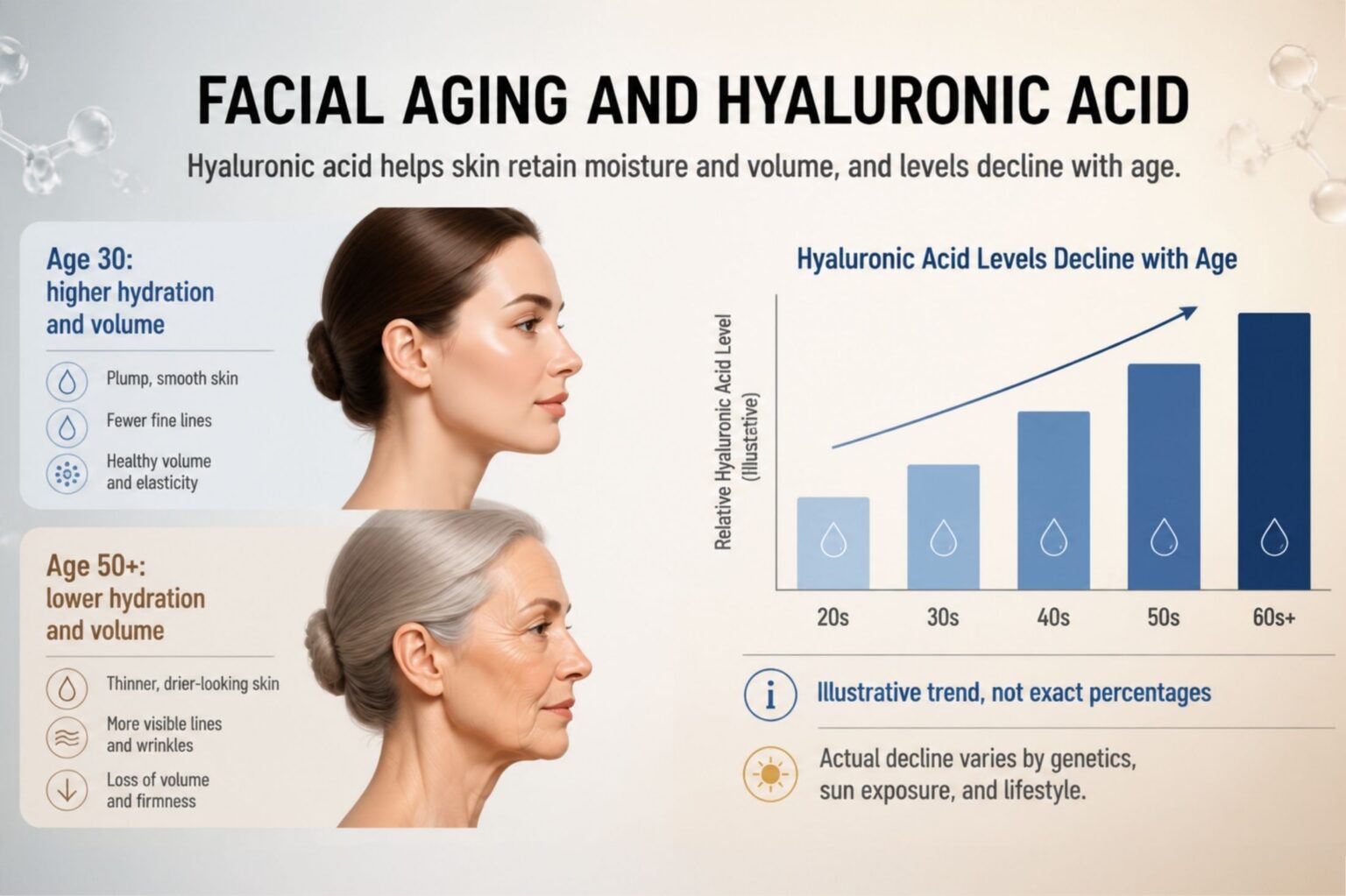
When we talk about facial aging, the focus often lands on visible lines and skin laxity. But many of these changes begin deeper, within the extracellular matrix of the dermis. One of the key components involved in maintaining skin hydration and quality is hyaluronic acid. This naturally occurring molecule is found throughout the body and is especially abundant in the skin, where it helps retain moisture and support a smooth, supple appearance. As we age, both the amount and distribution of hyaluronic acid in the skin change, contributing to a gradual decline in hydration and resilience.
At our practice, we believe that effective rejuvenation starts with a clear understanding of skin physiology. Aging is a multifactorial biological process involving changes in collagen, elastin, fat distribution, and hydration. This guide explores the role of hyaluronic acid in skin health, how its decline contributes to visible aging, and how to approach these changes with evidence-based care.
What is Hyaluronic Acid?
Hyaluronic acid (HA) is a glycosaminoglycan—a type of sugar molecule naturally present in the skin and connective tissues. Its primary function is to bind water, helping maintain hydration within the extracellular matrix. In fact, HA can retain large amounts of water relative to its size, contributing to the skin’s plump, smooth appearance.
In the skin, hyaluronic acid exists in a dynamic balance: it is continuously produced and broken down. This turnover happens relatively quickly, which allows the skin to adapt and repair, but also means that any imbalance in production or degradation can affect overall skin quality. Beyond hydration, HA also plays a role in cell signaling, wound healing, and maintaining a healthy extracellular environment.
How Hyaluronic Acid Changes With Age
Rather than declining at a fixed annual rate, hyaluronic acid levels change gradually over time and vary significantly between individuals. Research shows that both the quantity and distribution of HA in the skin shift with age, with more noticeable changes beginning in the third and fourth decades of life.
By midlife, many individuals experience a meaningful reduction in skin hydration and elasticity, partly linked to decreased HA synthesis and increased degradation. These changes are influenced not only by intrinsic aging but also by environmental factors such as sun exposure, pollution, and lifestyle habits. The result is skin that may appear thinner, less radiant, and more prone to fine lines.
The Role of Hyaluronic Acid in Skin Quality
Hyaluronic acid contributes to the skin’s overall quality by maintaining hydration within the extracellular matrix. This hydrated environment supports collagen and elastin function, helping the skin remain supple and resilient.
- Hydration and Radiance: Adequate HA levels help the skin retain moisture, contributing to a smoother and more luminous appearance.
- Texture and Fine Lines: Dehydrated skin can accentuate fine lines. Maintaining hydration helps soften their appearance.
- Skin Comfort and Function: Well-hydrated skin supports overall barrier function and is less prone to irritation.
It’s important to note that while hyaluronic acid supports skin quality, structural facial changes—such as volume loss and sagging—are also driven by shifts in fat pads, collagen breakdown, and bone remodeling.
External Factors That Accelerate HA Decline
In addition to natural aging, several external factors can accelerate the breakdown of hyaluronic acid in the skin. Ultraviolet (UV) radiation is one of the most significant contributors, promoting the formation of free radicals that degrade components of the extracellular matrix, including HA.
Other factors—such as smoking, chronic inflammation, and high levels of oxidative stress—can further disrupt the balance between HA production and degradation. Over time, these influences contribute to visible signs of premature aging, often referred to as photoaging.
Approaches to Supporting Skin Hydration
Topical skincare products containing hyaluronic acid can help improve surface hydration and support the skin barrier, especially when formulated with complementary ingredients. While these products are effective for maintaining skin comfort and appearance, they do not replace deeper structural changes associated with aging.
In aesthetic medicine, hyaluronic acid-based injectables are used to restore volume and enhance facial contours. In addition to providing immediate structural support, some evidence suggests they may contribute to localized collagen remodeling over time. Treatment plans should always be individualized, taking into account overall facial anatomy and long-term goals.
A Balanced Approach to Aging
Because skin aging is influenced by multiple factors, the most effective strategies focus on prevention, maintenance, and targeted intervention when appropriate. Sun protection, healthy lifestyle habits, and consistent skincare form the foundation, while professional treatments can be introduced based on individual needs.
Our approach is grounded in clinical integrity and natural-looking results. By understanding how elements like hyaluronic acid contribute to skin health, we can develop personalized plans that support long-term skin quality and overall facial harmony.
MEDICAL DISCLAIMER: The information provided in this article is for educational purposes only and is not a substitute for professional medical advice, diagnosis, or treatment from a qualified healthcare practitioner. Always seek the advice of a physician or other qualified health provider with any questions you may have regarding a medical condition or procedure.To schedule a personalized skin analysis and explore your options, book your consultation today.