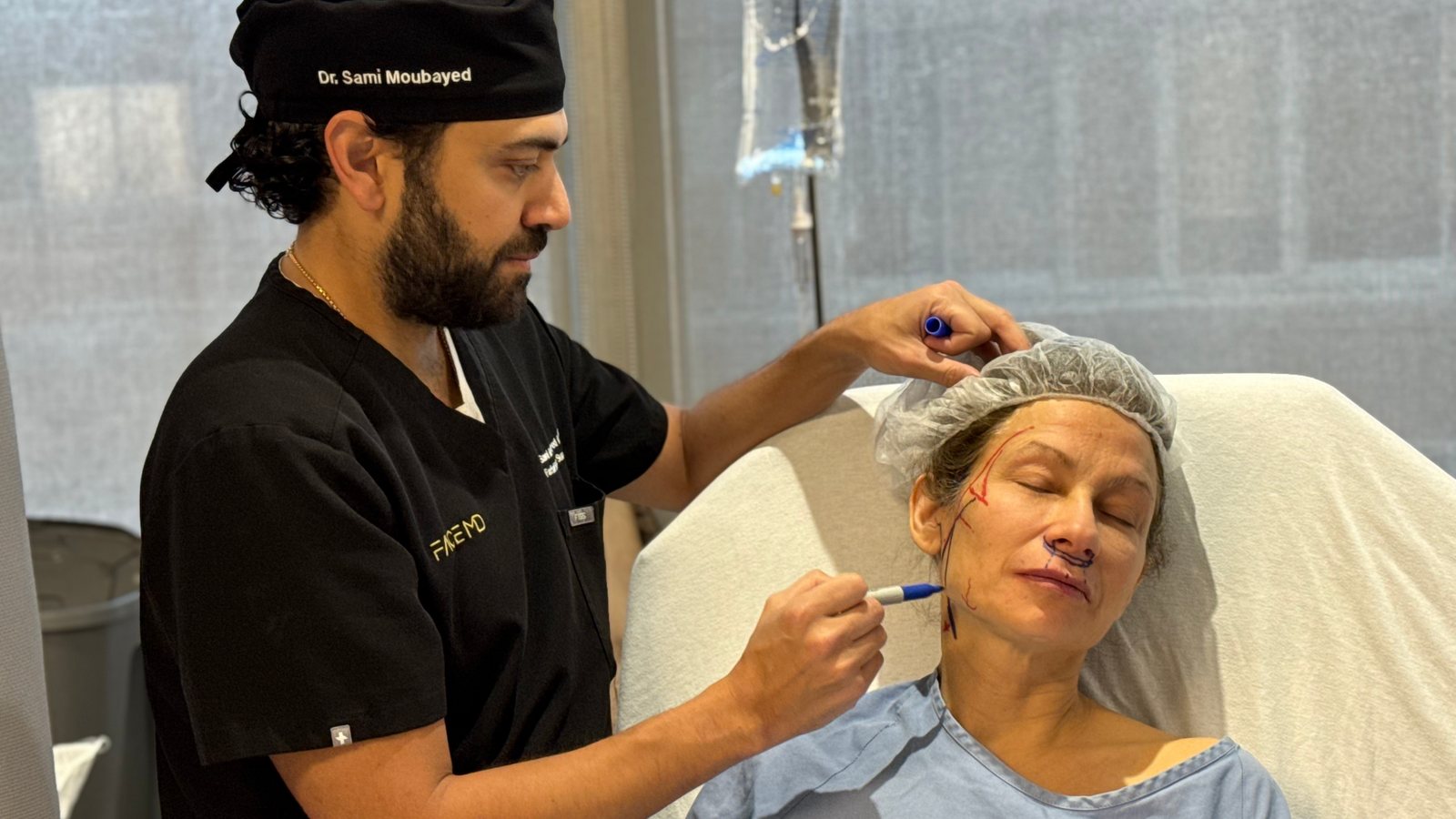
Dr. Moubayed is an otolaryngologist – head and neck surgeon practicing facial plastic surgery in Montréal. In his view, lymphatic drainage of the head and neck is an often overlooked topic: not well researched, rarely taught to patients and seldom discussed. Yet his team has been building it into post-surgery follow-up for years.
The role of the lymph nodes in the head and neck
To understand drainage, you first need to know about the lymph nodes. These are structures in the head and neck that take care of extra fluid. When there is swelling, especially after surgery or a procedure, that fluid usually leaves through the lymph nodes and then goes into the venous system.
In theory, if you manually open up these lymph nodes, you can help move the fluid out of the head and neck. That is the idea behind manual lymphatic drainage: a gentle massage, done in a specific order, that follows the natural path of the lymph.
What the studies say, and what the clinic does
Dr. Moubayed is upfront: there are not many studies on this. Most of the data comes from maxillofacial surgeons, who looked at manual lymphatic drainage after third molar surgery, meaning wisdom teeth.
The protocol described here is the Clinique Face MD protocol. It has not been studied extensively, but the clinic has been using it for years. In Dr. Moubayed’s experience, it helps patients a lot, especially those who had a face and neck lift or a neck lift alone. It can also apply to any swelling in the head and neck area.
When to start drainage after a facelift
You start only when your surgeon gives you the go-ahead. For his own patients, Dr. Moubayed likes to start about one week after a face and neck lift, at the one-week follow-up appointment.
At that visit, he checks several things before giving the okay:
- no hematoma;
- no problem with the incisions;
- no infection.
If everything looks good and the surgeon agrees, the team recommends doing the drainage twice a day, morning and evening. Every surgery and every patient is different: always follow your own surgeon’s instructions.
The four-step protocol, from the bottom up
The principle is simple: you start at the bottom, to prepare the lymph nodes that will receive the fluid, then work your way up. It is a massage, not pressure. The idea is simply to move the fluid gently.
1. Above the collarbones
Find your collarbones. Just above them, gently massage in a circular motion, about 20 times. This opens up the lowest lymph nodes, the ones that drain lymph into the venous system, so they are ready to receive the swelling above.
2. The neck, top to bottom
Next, massage the neck from top to bottom. You can use a flat hand or your fingers, as long as the motion stays gentle and always goes from top to bottom.
3. Under the chin
Once the neck is drained, move to the area under the chin, the submental area. Using two fingers, start under the chin along the jaw and massage front to back, about 20 times. This motion connects with the neck area.
4. The face, top to bottom
Finally, massage the face from top to bottom, with your hands or fingers, about 20 times. The whole sequence only takes a few minutes.
How long should you keep going?
Dr. Moubayed recommends repeating the sequence twice a day, morning and evening, until the next post-operative appointment. He usually sees patients about two months after surgery. For those first two months, this is what he recommends, and in his practice and experience it helps tremendously with swelling.
Drainage does not replace medical follow-up. Every surgery has risks, and unusual swelling, increasing pain, redness or fever should be reported to your care team promptly. A face or neck lift requires a consultation to assess whether the procedure is right for you, for example a deep plane facelift.
Considering a facelift and want to understand recovery? Book a free 30-minute discovery call with our team.